
GameHotel Guide
Brotato Review: Survival Philosophy Behind Potato Gunfights | GameHotel
Brotato评测:土豆枪战背后的生存哲学 的资料整理与编辑草稿。
Games shown in this list
3 official media items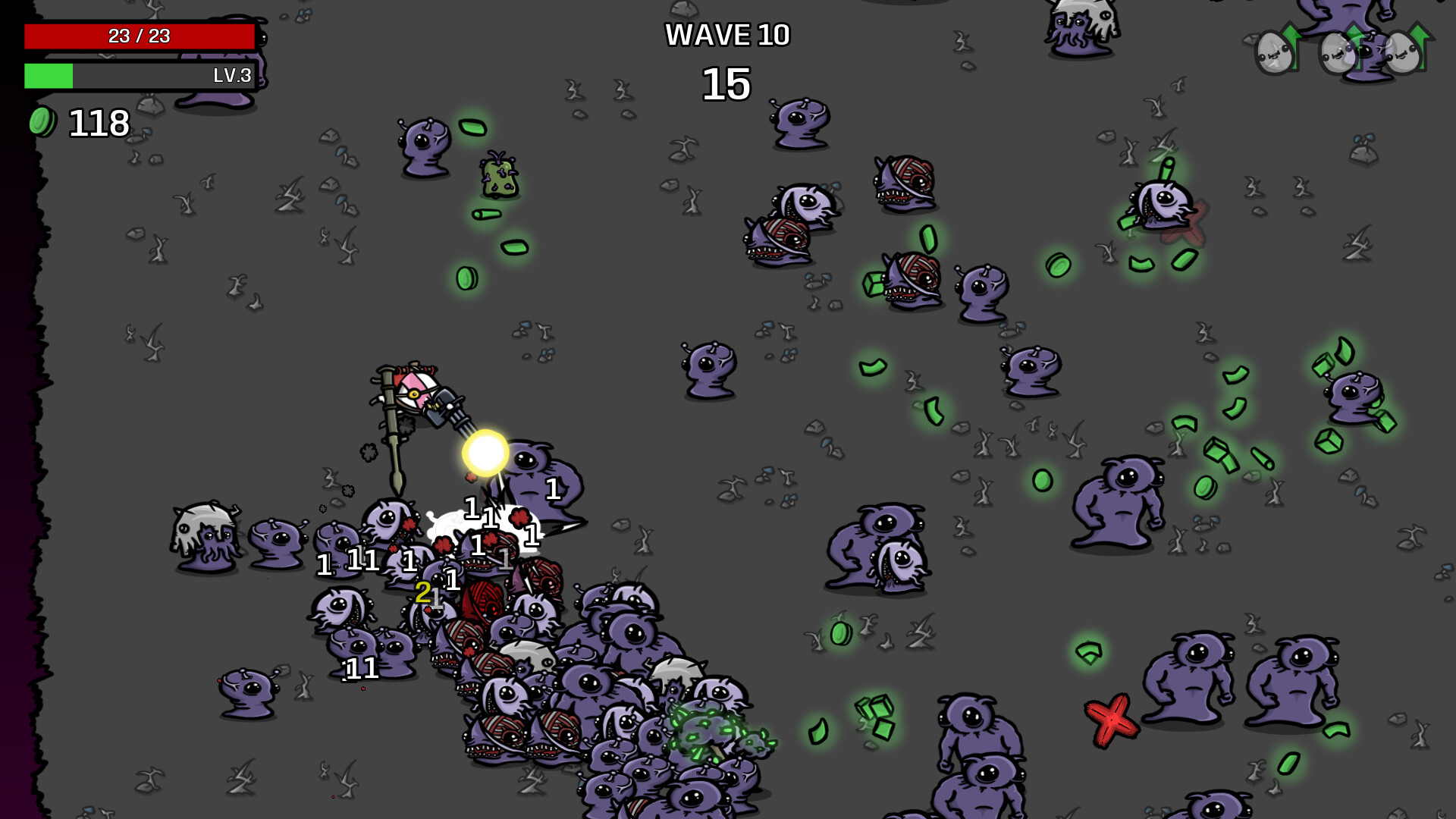
Review: Brotato — A Potato’s Survival Rhapsody
Core Experience: The Mad Mowing of a Six-Armed Spud
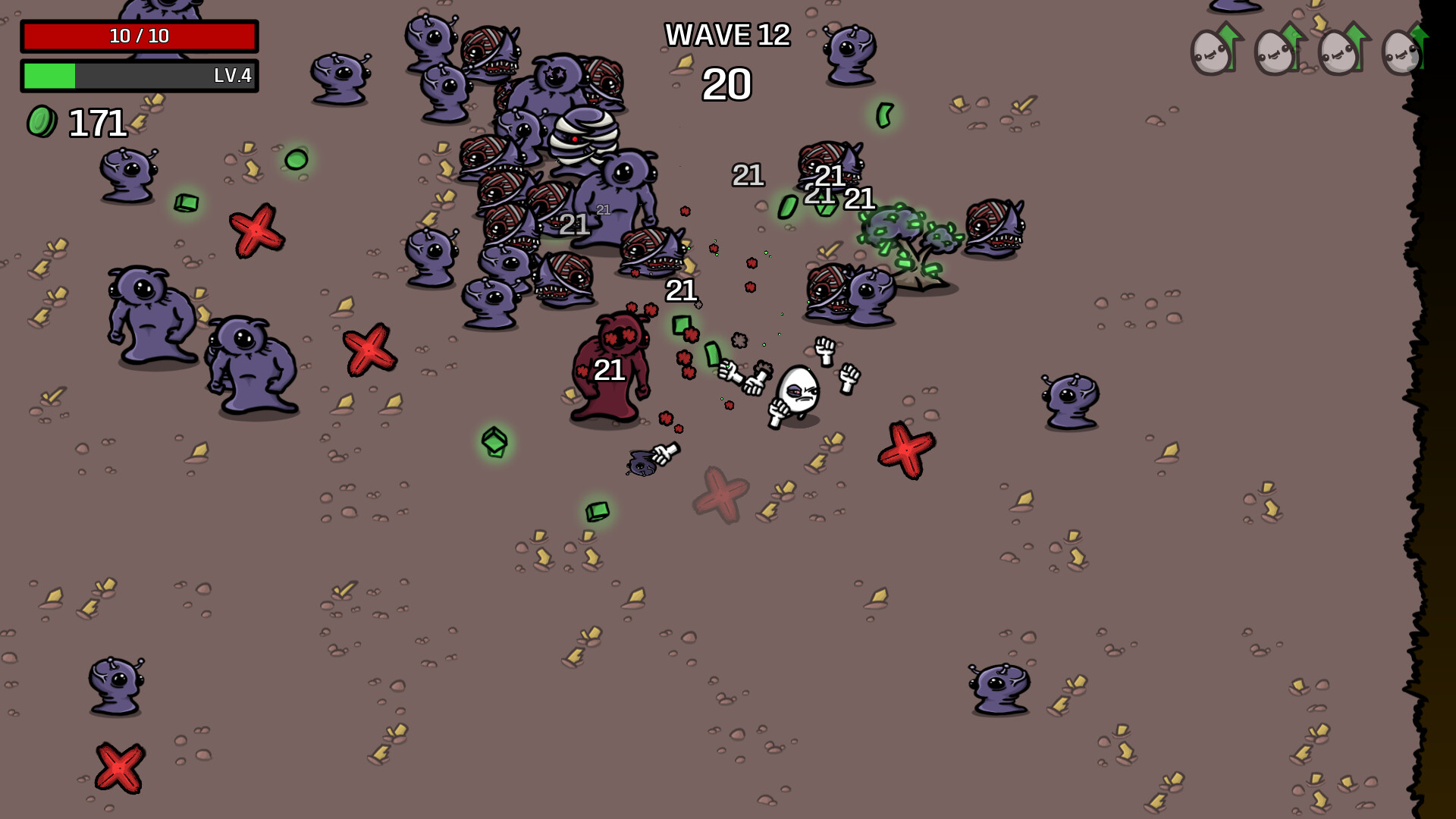
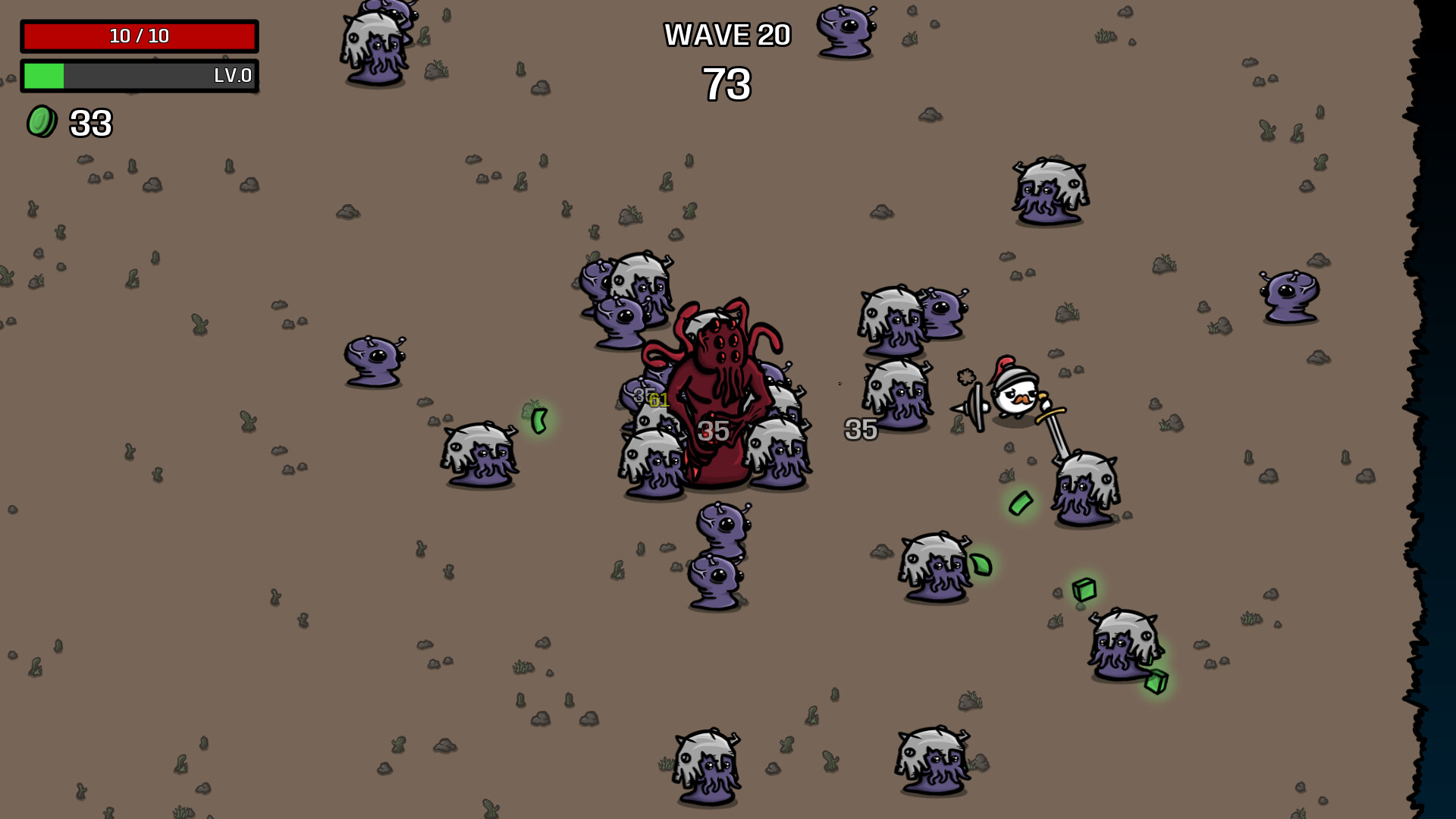
My first impression of Brotato was “absurd yet rigorous.” You play as a potato who crash-landed from a spaceship, whose only superpower is wielding six weapons at once. The core loop is brutally simple: across waves lasting 20 to 90 seconds, you blast aliens with auto-aim or manual targeting, then use the downtime to collect materials, buy gear, and power up before the next assault. This “fight-shop-fight-again” rhythm is so tight it becomes addictive, with each run typically wrapping up in under 30 minutes—perfect for bite-sized sessions.
What struck me most is its “build-driven” design philosophy. At the start of each run, you choose from dozens of characters (like “One-Armed,” “Maniac,” “Lucky,” “Mage,” etc.), each with unique stat modifiers and playstyle tendencies. For example, “One-Armed” can only wield one weapon but doubles its damage, while “Mage” relies on elemental damage. This design turns every run into a mini-experiment: you’re no longer just passively killing monsters, but actively planning a growth path from weapons to items. I’ve tried burning through swarms with six flamethrowers, and I’ve also gone full melee, clubbing my way through with sticks—each successful clear felt rewarding because of my understanding of the build and my on-the-fly adjustments.
Pros and Cons: Balancing Thrills with Repetition
Strengths: Easy to Pick Up, Depth in the Details
- Flexible Switching Between Auto-Aim and Manual Targeting: The default auto-aim lets newcomers quickly experience the joy of mowing down hordes, while manual targeting offers precision for those who want more control. This design lowers the barrier to entry without capping the skill ceiling.
- Rich Combinations of Characters and Items: The game currently offers dozens of characters and hundreds of items. Weapons alone range from flamethrowers and submachine guns to rocket launchers and even sticks and stones. I especially appreciate the synergy between items—like pairing an attack speed boost with a necklace that triggers explosions on hit, which can clear the screen in an instant. This depth of combination means you’ll always discover new strategies on repeat plays.
- Local Multiplayer Co-op: Supporting up to 4 players on the same screen is rare in this genre. Teaming up with friends using different characters (e.g., one tanks while another deals ranged damage) makes the experience even more chaotic and fun than solo play.
- Adjustable Difficulty: Built-in assist options let you tweak enemy health, damage, and speed, making the game accessible to newcomers while still challenging for veterans. I’d recommend first-timers lower the enemy speed a bit to get familiar with the item system.
Weaknesses: Late-Game Content Feels Thin, Repetition Creeps In
- Inherent Limitations of the Wave Format: Although each run only has about 20 waves, the core gameplay remains “stand and clear → shop → stand and clear again.” Once you’re familiar with the meta builds, subsequent runs can devolve into a repetitive cycle of chasing the “optimal solution.” After 20 hours, I noticed my excitement waning—unless I deliberately tried off-meta characters or weapons, the experience started to feel samey.
- Almost No Story: The game’s backstory exists only in the opening blurb; there’s no narrative drive during actual play. If you’re expecting something like Hades, where death advances the plot, Brotato will disappoint. It’s more of a pure “strategy survival sandbox.”
- Questionable Balance for Some Characters: Certain characters (like “Lucky”) are noticeably weaker than others and are nearly impossible to clear on higher difficulties. It’s unclear if the developer plans to adjust them, but in the current version, some characters feel more like “challenge modes” than viable playstyles.
Who Should Buy It and Buying Advice
Who Should Buy?
- Fans of “survivor-like” mowing games like Vampire Survivors: Brotato shares a similar core experience but adds a more complex gear system and character differentiation, appealing to players who crave strategic depth.
- Casual players with limited time: Each run is under 30 minutes, you can pause anytime, and there’s no forced online play or daily quests. Perfect for a quick session during lunch or a commute.
- Hardcore players who love number-crunching and build optimization: The game offers enough variables to keep you optimizing. It took me 10 hours to clear the highest difficulty for the first time, and the community is still uncovering new strategies.
Who Should Wait?
- Players seeking story or immersion: Brotato has almost no narrative—all the fun comes from combat and growth. If you need emotional engagement, skip this one.
- Those sensitive to repetition: Even with character variety, the core gameplay can feel stale after 10 hours. If you dislike grinding the same mode, wait for a sale or try the demo.
Buying Advice
Brotato is reasonably priced (around $5 on Steam) and often goes on sale. If you’re unsure, there’s a free demo on Steam that lets you play the first few waves. Also, the game supports Steam Workshop, where the community has already created many new characters and weapon mods, significantly extending its lifespan. If you plan to play long-term, keep an eye on updates—the developer hasn’t confirmed any major DLC yet, but the current version already offers 30-50 hours of fun.
Conclusion: A Potato Worth Tasting
Brotato isn’t the kind of game that makes you exclaim “masterpiece,” but it nails the balance between “thrills” and “strategy.” It doesn’t try to tell a grand story; instead, it uses simple rules and rich combinations to make you want to “go for one more run” after every death. If you can accept its repetitiveness, it’s a highly cost-effective survival adventure. At least, when I’m piloting that six-armed potato charging across the screen, I feel pure joy.